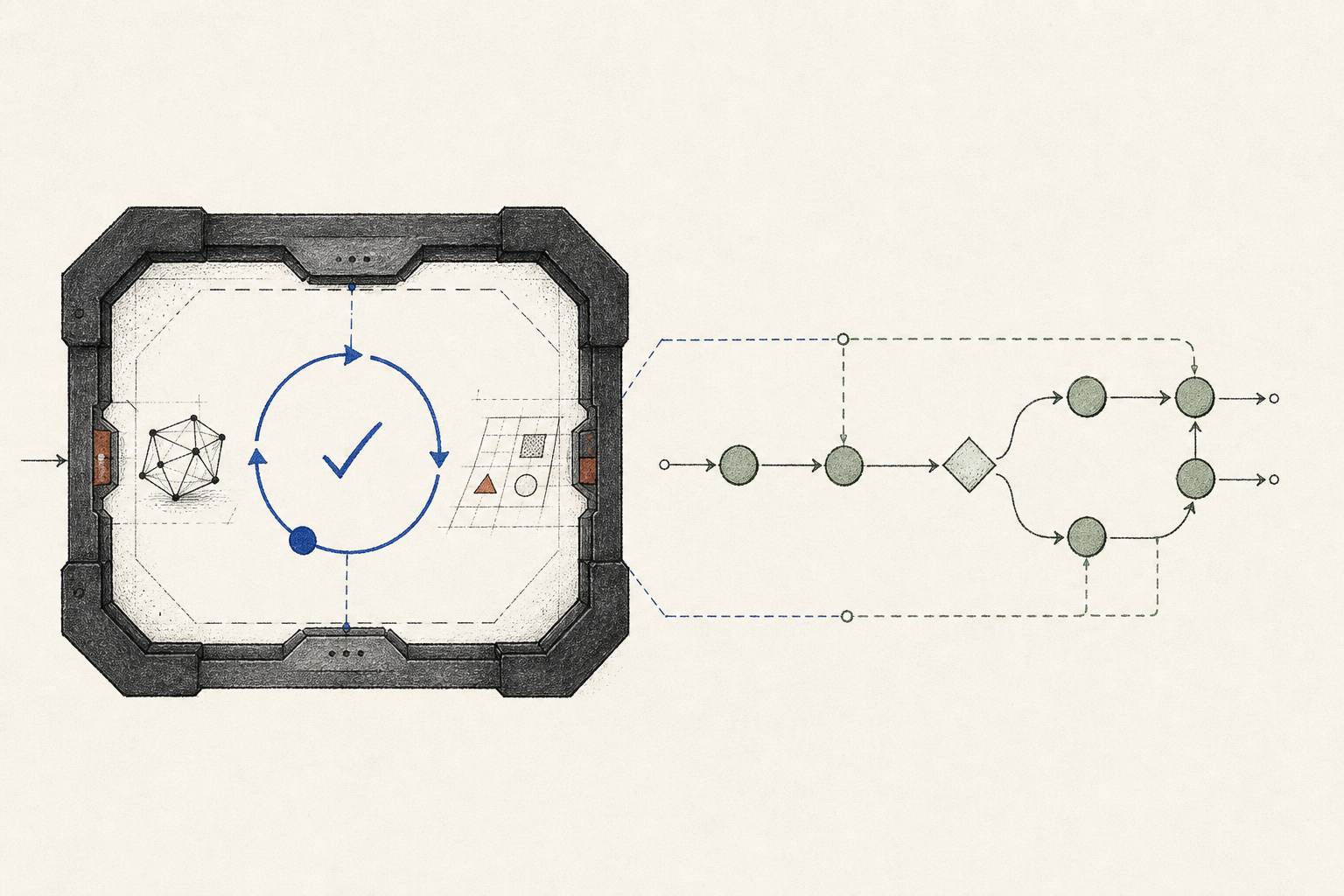
Codex is most useful when a software task can be expressed as an engineering contract rather than a vague wish. That contract has four artifacts: a scope that says what should change, repository context that makes local conventions visible, a patch that can be reviewed, and a verification step that can fail. Omitting any one of them makes a result harder to trust, even if the code looks plausible at first glance.
The official prompting guidance points in this direction: identify the desired behavior, name relevant files or reproduction steps, preserve constraints and state how the result should be verified. This is not prompt ornament. It gives the agent an observable target and tells a reviewer what evidence to expect when the work is done.
Durable context should be deliberately small. Repository guidance belongs in a project instruction file; repeatable procedures belong in a skill; live data belongs behind a connector or tool. A request like 'fix the checkout' should not silently become a permanent rule for every task, and a temporary workaround should not be mistaken for a repository convention.
The practical test is to hand Codex a bug that has a known reproduction. Ask for a short plan, a scoped patch, the exact test command and a candid note about what was not tested. If those four artifacts are present, a teammate can make an informed review decision. If they are not, the apparent speed of the first edit is usually a false economy.